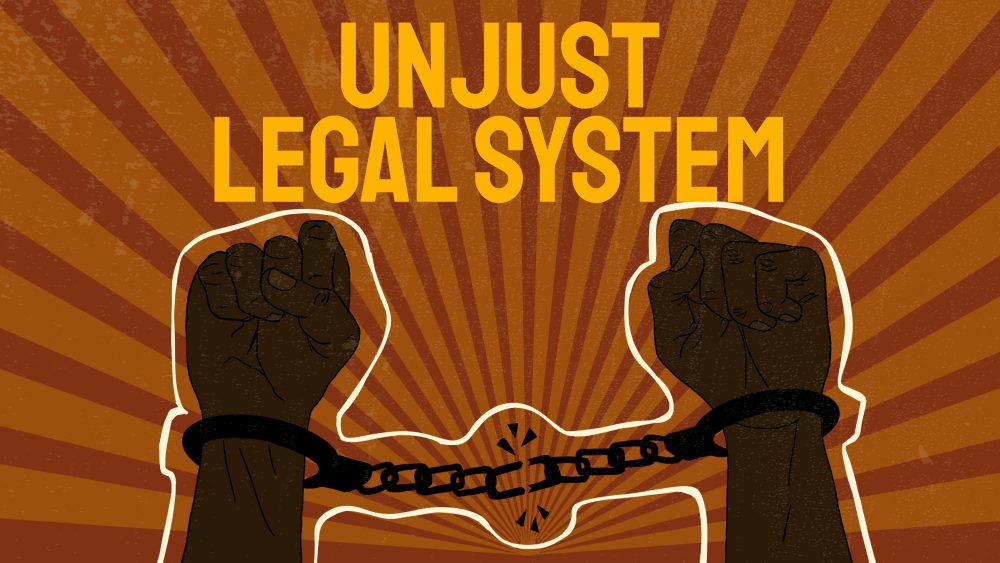
“Legal system” is a broad term used to describe the individuals, institutions and laws that govern our lives and enforce state control of them. The U.S. legal system as we experience it today does not treat every person as equals. The inequality exists across many identities and experiences because of historic injustices and the failure to adequately address them. Our prison system is unjust toward black people. They are imprisoned in disproportionate numbers and experience frequent police brutality and widespread discrimination in employment, health care, housing, courts, policing, and schools. The net effect is that this system prevents many – especially those with diverse identities such as Muslim, Trans, or Latinx – from experiencing a decent life. And of course, legal punishment disproportionately affects less affluent communities and those of color. Without the resources to pay bail or hire private attorneys, these communities suffer far more than others.
Michelle Alexander’s (2012) the New Jim Crow describes how slave patrols function in ways similar to how law enforcement operates in Black and other communities of color. Alexander describes how the war on drugs over the last thirty years impacted marginalized communities by targeting of Black non-violent drug offenders. In the New Jim Crow, we see the historical injustices that shape legal systems today. Racial minorities, especially people of color are thought of as high risk criminals because they are more likely to have been incarcerated or to be incarcerated. Consequently, police are implicitly biased to be more aware of these racial groups because they are stereotyped as criminals.